October 18
Let the Right One InOctober 18 is the only date the moving-truck driver recorded for a secretive nighttime delivery from Norrköping to Blackeberg. Recovered by police in December, the entry fixes the arrival of a man and a girl in a suburb whose planned modernity had left it unprepared for the hidden danger moving into its midst.
The Date in the Record
The date survives in the driver’s notes as “18 October. Norrkoping-Blackeberg (Stockholm).” The record gives no year. In December, police tracked down the driver and asked about the journey; his sparse notation was the concrete trace he could offer of the move.
A Nighttime Arrival
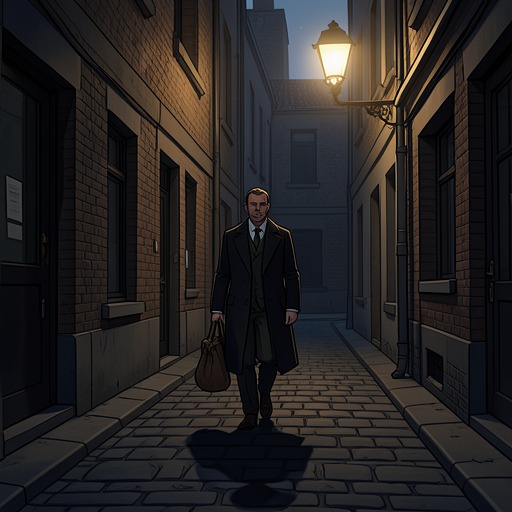
The driver recalled that the occupants were a father and daughter, and described the girl as pretty. Their delivery required little work: there was almost no furniture, only a couch, an armchair, and perhaps a bed. Although the driver said a nighttime move would cost more because of the overtime surcharge, the customer insisted that it be done at night. The driver remembered that insistence as especially important, but the move itself passed without anyone noticing them arrive.
Blackeberg as a Destination
The delivery entered a carefully planned suburb of earth-colored concrete apartment buildings scattered among green fields. Blackeberg offered a town center, spacious playgrounds, green spaces, and pedestrian paths, but it had little local past: children could find almost no connected history to study, and the old mill, tobacco king, and buildings by the water belonged to a remote time. Nine thousand inhabitants lived there without a church. The orderly, rational setting helps explain why its residents were so unprepared for what had moved in.
The Later Disclosure
When the police informed the driver of the events and of whom his truck had carried, he looked back at his own handwriting with revulsion. He resolved never to tell anyone that he had moved the man and the girl into Blackeberg. The October entry thus becomes more than a routine delivery notation: it marks an arrival that was deliberately hidden, while the driver’s later silence preserves the unease of having unknowingly helped bring it about.